

GET INSPIRED BY  I  INFLUENTIAL LEADERS  I  TOP ENTREPRENEURS  I  EXPERT COACHES  I  INDUSTRY LEADERS


We Are Family: Family Dynamics 2.0

Kim Anthony • March 15, 2022

Different Family Types Have Unique Dynamics

The time wherein nuclear families (mom, dad, and one or more children) were seen as normal in the United States has long gone. Different family types are now much more acceptable than they were in the past, in addition to being more common. Being raised by a single mother or belonging to a mixed household is not as unusual now as it was before. The family dynamic has changed, and in this article, we’re going to talk about it. 

What’s even more fascinating is that each type of family—there are six main ones on which everyone can agree—has a different family dynamic. If you’re currently experiencing family issues or are going through a significant change in your family structure, learning about your family type and considering how it influences your family dynamic might help you make sense of the situation. You can gain a better understanding of the strengths and weaknesses that your family is likely dealing with by taking a look at the type and dynamics of your family. To better understand family dynamics, some people may decide to start taking parenting courses or using online therapy.


Let’s Look at the Six Different Family Types

1. Nuclear Family 

Two parents (often married or in a legal relationship) and their children form nuclear families, also referred to as primary or traditional families. Nuclear families may have one or more biological or adopted children, but the main focus is on the parents raising their children together in the same home.

Although it appears that nuclear families are decreasing, the 2016 U.S. Census data reveals that 69% of kids are still raised in atomic homes. Even if it doesn’t often happen that way, most people consider this the ideal family setting for raising kids.

Strengths of the nuclear family

  • Now that the economy is stable, both parents generally work.
  • Children brought up in a safe family environment
  • Consistency 
  • Put communication first

Weaknesses of nuclear families

  • Exclusion from the extended family can cause loneliness and stress and make it more difficult to resolve conflicts.
  • Nuclear families may become overly concerned with their children and overlook other important matters as a result.

Strong and successful nuclear families can exist when both parents set excellent examples for their children. These kids frequently have a lot of advantages over children from less privileged families, which can help them succeed in life. However, like any family, nuclear families have their own problems to face. For instance, if parents exclude grandparents and other extended family members, their support system won’t be strong, making it difficult to go through difficult times.

2. Single Parent

Single parents and one or more children make up single-parent homes. In these situations, the parent is either divorced, widowed, or has never been married. In a paper published in 2004, Ellwood, D.T., and Jencks, C. discuss the rise of single-parent families since the 1960s, when divorce rates began to rise (and so did births happening out of wedlock). They propose that several factors include letting go of traditional gender norms, being comfortable with independence, and achieving the goal of parenting a child whether or not a partner is there.

Nowadays, it’s not unusual for a mother, father, or parent to raise a child alone, and single-parent households have their advantages as well as disadvantages.

Strengths of the single-parent family: 

  • Family members can grow super close.
  • Learn to split home tasks.
  • Both kids and parents can develop great resilience.

Weaknesses of single-parent families

  • Families find it difficult to survive on one income, and some are dependent on social assistance.
  • For parents who need to work full-time, finding affordable, high-quality childcare can be challenging.

Raising children alone can be challenging. Being a child can also be challenging if your parents are divorced or if you only knew one parent growing up. Families in this situation must make the most of their means and depend on one another for love and support.

3. Extended Family 

Although most Americans would consider nuclear families to be the “traditional” family, extended families are significantly more prevalent and have been present for a long time in other cultures. Extended families are those that typically include children as well as two or more adults who are connected by blood or marriage. This frequently involves cousins, aunts, uncles, or other family members residing under the same roof.

Typically, extended families share a home to encourage social stability and advance common goals. Parents might, for instance, reside with their kids and their grandparents. As a result, the grandparents may be able to help with child care while the parents are at work. This enables the family to care for their parents in old age.

Strengths of the extended family: 

  • It’s essential to show the elderly respect and attention.
  • More family members are close to helping with housework, caring for children, emergencies, etc.
  • Social assistance

Weaknesses of extended families

  • If parents are paying for multiple other people and children without receiving any more money, financial problems may arise.
  • Depending on the setting, a lack of privacy

4. Childless Family 

Families without children are those when both couples are unable to have children or do not want to. These families are usually ignored or excluded in the area of family types and dynamics (even though you can still have a family without children). Growing up, getting married, and having kids used to be the norm, but in the modern world, more people are delaying or giving up having kids altogether.

These unique families include working couples who like to sometimes care for other people’s children (such as nieces and nephews) rather than have their own children. They might also be adventurous couples who don’t think having children will fit well with their way of life. These relationships can exist between a husband and wife, a husband and wife, a wife and a wife, or a partner and partner.

Strengths of the childless family: 

  • Typically, they have more money available.
  • There are no children to support.
  • You get greater freedom to travel, go on adventures, and seek careers or education of your choosing.
  • More time is spent together as a couple.

Weaknesses of childless families

  • When all of their friends and family start having children, couples may feel alone or excluded.
  • If you enjoy children, you could feel as though something is missing.
  • Being childless due to infertility can be difficult for couples.

5. StepFamily 

A stepfamily is made up of two different families that unite to become one. One divorced parent with children may marry a person who has never been married and has never had children, or two divorced parents with one or more children may combine their households.

Step-families have increased in popularity over time, much like single-parent households. Stepfamilies, like all of these different kinds of families, have their own set of strengths and problems that they must work through.

Strengths of the step families: 

  • The advantages of having two parents closely benefit children.
  • Strong relationships can develop between kids and their new siblings or stepparents.
  • Advantages of two incomes over single-parent households

Weaknesses of step families

  • Adjustment can be challenging for both parents and children.
  • Problems might arise when parents try to discipline each other’s children.
  • Possibly chaotic or inconsistent.

It can be challenging to move from a nuclear or single-parent family to a stepfamily. It might be difficult to adjust to new members of your family, especially if they are part of another family. However, some children will eventually grow to accept their stepparents and step-siblings as members of the family and develop close relationships with them. 

6. Grandparent Family 

The grandparent family is the last category of family. When one or more grandparents are raising their grandkids, that situation is referred to as a grandparent family. Despite their uniqueness, grandmother-headed families are becoming more widespread. They said that in the United States, almost 2.4 million grandparents are raising 4.5 million children, according to census data.

This situation arises when parents are either unable or unwilling to properly care for their children. For instance, the parents may be ill, too young to care for the child, struggling with a substance use disorder, or even dead. Thankfully, grandparents step in and take on the role of parents for their grandkids in these situations.

Strengths of the grandparent family: 

  • There is a strong bond between grandparents and grandkids.
  • Avoids putting children in foster care or other settings.

Weaknesses of grandparent families

  • Grandparents may struggle to make ends meet if they work part-time or not at all.
  • It may be challenging for them to keep up with young children or discipline them as they get older.

The upbringing of grandchildren by grandparents can be challenging. But it can be beneficial to both children and grandparents to have support.

Conclusion

Whatever family type you identify with, each has its own set of advantages and disadvantages. This is usually most obvious to persons who have gone through one or more changes in family type during their lives and can relate to how unique each family dynamic can be. Whether you are part of a same-sex family, an interracial family, a binuclear family, a multigenerational family unit, or have polyamorous parents, each family is unique in its own way.

Individual or family therapy can help persons dealing with changes in family type/dynamics. BetterLYF, an online counselling service, can provide an outlet for people who are having difficulties with their relationships.

Seeking help is a sign of courage. Don't let self-limiting beliefs hold you back from a life you deserve. Avail online therapy to become happier and better. Learn how


This article originally appeard in BetterLyfe.

By Kim Anthony November 24, 2025
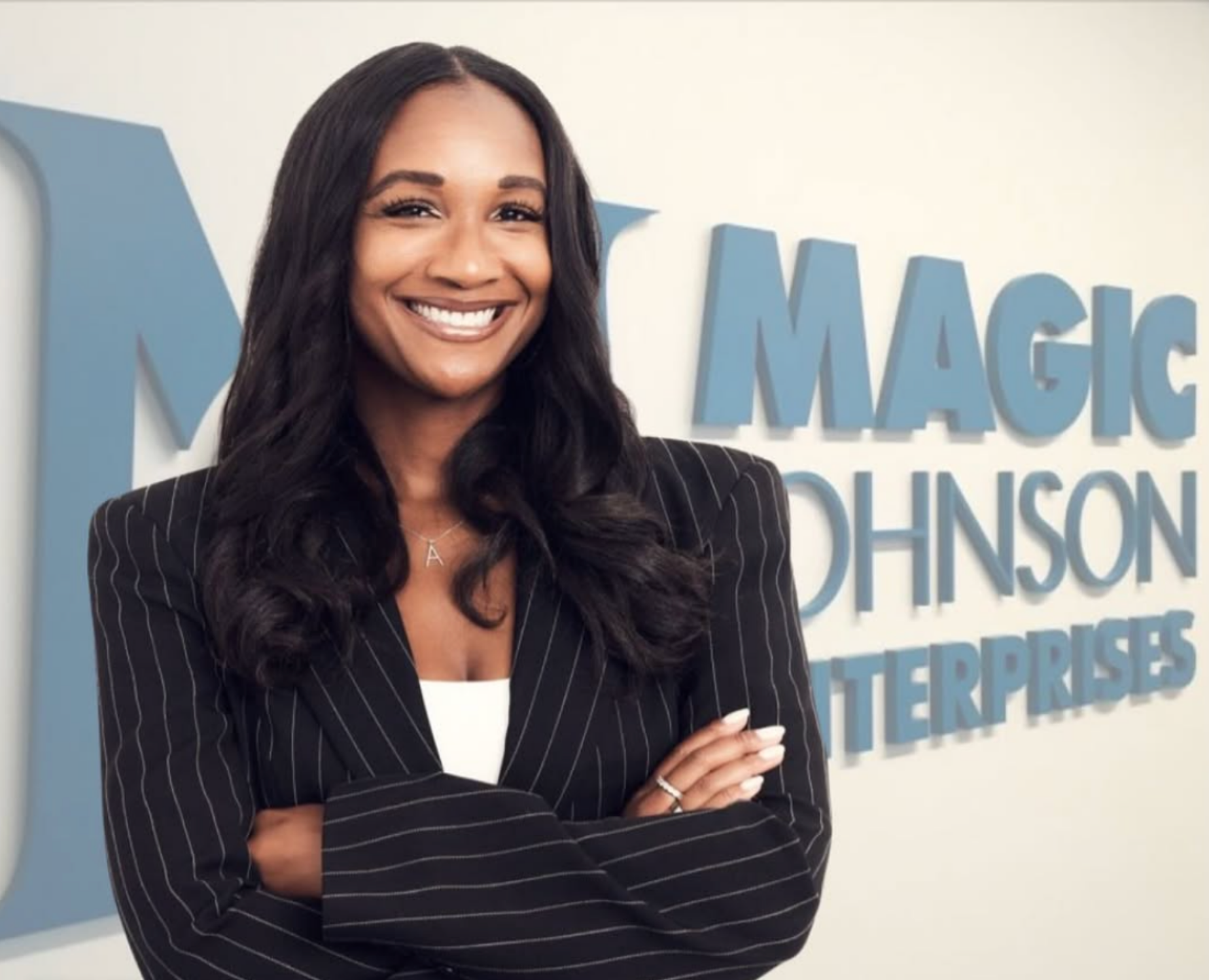
AStory of Representation, Innovation, and the Next Chapter of Urban Economic Power Magic Johnson Enterprises (MJE) has announced a powerful new chapter in its legacy of economic mobility and community-centered entrepreneurship: Alexia Grevious Henderson has been named President of Magic Johnson Enterprises, effective immediately. Her appointment signals more than a promotion — it represents a generational shift. It affirms the rise of a new class of visionary leaders who understand that wealth-building, community uplift, and strategic innovation must move together. A Leader Rooted in Excellence — and Built for Impact Since joining MJE in 2017 as Senior Manager of Marketing and Communications, Henderson has steadily advanced, proving herself to be a builder, a strategist, and a trusted architect of the MJE brand. Most recently, as Vice President of Strategic Partnerships and Marketing, she led: High-level corporate partnerships Fulfillment of national and global brand contracts Integrated marketing and communications efforts that expanded MJE’s influence and reach Under her leadership, MJE strengthened its position as one of the most respected vehicles for community-driven economic growth. Magic Johnson himself affirmed her brilliance: “Alexia is one of the brightest young minds in business today. Her leadership and creativity have elevated our brand, our partnerships, and our mission.” Her track record reflects what the Urban Enterprise Framework celebrates: excellence, service, access, and the advancement of historically underestimated communities. A Career Anchored in Purpose Before MJE, Henderson gained experience with the Washington Commanders (formerly the Redskins) and began her career with the NCAA in Indianapolis. Her work and reputation have earned her national recognition, including being named: Sports Business Journal’s “30 New Voices Under 30” Diverse Representation’s “Top Ten to Watch” Beyond corporate success, she serves on the board of A.Bevy, an arts and education nonprofit helping young adults find clarity in their passion, path, and purpose — embodying the Urban Enterprise principle that leadership is service. A Powerful Representation Moment for Urban America The Urban Enterprise Framework recognizes milestones like this as more than professional wins — they are community wins. Henderson’s presidency represents: A breakthrough for women in the C-suite leadership A breakthrough for Black leaders shaping national economic strategy A breakthrough for the next generation for urban innovators and changemakers Rooted in Community, Positioned for Global Impact A native of Fort Mill, South Carolina, Henderson is a graduate of Clemson University and holds an MBA from Pepperdine University. She now resides in Los Angeles with her husband, Aaron — the heart of a city where entrepreneurship, entertainment, and community-driven innovation intersect. About Magic Johnson Enterprises Founded by Earvin “Magic” Johnson, MJE is a diversified investment company committed to lifting communities through strategic partnerships across entertainment, sports, technology, real estate, and more. Its work aligns deeply with the Urban Enterprise Framework: building access, expanding ownership, and driving economic mobility in urban and underestimated communities.
By Kim Anthony November 17, 2025
In the tapestry of American entrepreneurship, one thread has been tugged and twisted for centuries. It’s the thread of access—or rather, the lack of it. Access to capital. Access to ownership. Access to the kind of financial tools that build legacies and create wealth that lasts. For Black entrepreneurs, this thread remains stubbornly unfinished. Not because of a lack of brilliance, hustle, or vision, but because the capital necessary to scale dreams has too often been withheld. Into that longstanding gap steps the Black Cooperative Impact Fund (BCIF)—an organization that is more than a lender. It is a force. A movement. A quiet revolution wrapped in the conviction that Black economic power isn’t optional. It’s essential. BCIF isn’t simply distributing money. It is rewriting the narrative of what’s possible for Black entrepreneurs in Southern California. It is challenging the old assumptions about who gets funded, who gets to grow, and who gets to build the kind of wealth that outlives them. A Revolution Rooted in Economic Empowerment When you encounter BCIF for the first time, you feel it—an energy, a heartbeat, a purpose. Their declaration comes with clarity and courage: “Economic empowerment is our revolution.” It isn’t rhetoric. It’s strategy. BCIF understands what many overlook: When Black entrepreneurs thrive, everything around them transforms. Families stabilize. Neighborhoods shift. Wealth accumulates. Opportunities multiply. And a new kind of freedom emerges—one built not on survival but on ownership, agency, and possibility. This isn’t transactional lending. This is long-term social change. This is equity in motion. This is self-determination at scale. A Mission Built for Liberation BCIF operates as a community-rooted 501(c)(3) with a mission that is both practical and visionary. They provide interest-free microloans to Black-owned businesses that are committed to building economic power in their own communities. Their work plants seeds—assets, living-wage jobs, generational wealth—that grow into something far larger than a single enterprise. Their vision reaches further: to help close the racial wealth gap by supporting the entrepreneurs who already stand at the forefront of Black economic advancement. The innovators. The creatives. The problem-solvers. The community builders. They have the ideas, the grit, and the drive—but too often, not the fair and accessible capital to match. BCIF’s goal is as ambitious as it is necessary: to become the leading microloan provider for Black-owned businesses in Southern California and to fund 1,000 thriving enterprises by 2040. It’s more than a benchmark. It’s a blueprint—a long-term strategy to transform the economic landscape of a region. What Sets BCIF Apart In a financial world cluttered with red tape and barriers, BCIF stands in a different posture. Their funding model is rooted in clarity, trust, and community. Their loans carry no interest—none. No fees. No predatory terms disguised as support. Just capital that stays exactly where it belongs: circulating inside Black businesses and Black communities. Their focus is intentional. While many organizations speak broadly about “diverse markets,” BCIF centers the Black community unapologetically. Because closing the racial wealth gap requires direct investment—not generic, not diluted, not symbolic. And unlike traditional lenders, BCIF refuses to create hoops meant to disqualify. There is no punishing jargon, no unnecessarily restrictive approval processes. Their model is transparent and accessible, designed to empower instead of exclude. Every loan comes back into the fund, where it becomes fuel for the next entrepreneur. One business’s repayment becomes another business’s opportunity. It is the purest expression of cooperative economics—each success feeding the next, each win lifting the community higher. Why BCIF Matters—For Business, Community, and Justice It’s simple to say, “We support Black businesses.” It’s much harder to build systems that make that support real. BCIF understands that business ownership is one of the most powerful pathways to generational wealth. Ownership changes everything—income, options, legacy. Black-owned businesses also create the kind of jobs that stabilize communities and expand opportunity from the inside out. They also understand that the racial wealth gap is not a coincidence. It is structural. Deliberate. Historical. And so the solution must be structural too. BCIF doesn’t offer charity—they offer infrastructure: accessible capital, community investment, and a circular system that sustains itself. Their model ensures that every loan becomes the seed of another. Entrepreneurs support each other without ever having to meet. It is wealth-building as community practice. How the Model Comes Alive BCIF’s approach to lending is as human-centered as their mission. Black entrepreneurs across Los Angeles, Riverside, San Bernardino, and Orange counties can apply at any time throughout the year. The screening is thorough but fair, typically taking about four weeks, with approved businesses receiving capital within two. Most of the money donated—about three-quarters—flows directly into loans. The remainder supports operations, ensuring the fund is sustainable long term. There is no profit motive behind these decisions. Only impact. Your Vision and BCIF’s Vision Intertwine If you care about thriving Black communities… If you believe in entrepreneurs who create opportunity where there was none… If you believe economic justice is part of social justice… Then your values are already reflected in BCIF’s work. And there are powerful ways to stand with the movement. You can partner—bringing BCIF into your events, networks, and business circles. You can refer—connecting Black-owned businesses that simply need a fair chance. Or you can amplify—sharing BCIF’s message, because visibility is power and stories ignite movements. A Call to Step Into the Revolution Revolutions don’t begin in crowds. They begin in convictions—one person choosing to act, then another, and another. BCIF is constructing a new economic reality, and you are invited to help shape it. If you’re a Black entrepreneur in Southern California, you can apply for an interest-free loan. If you believe in economic justice, you can invest in the fund that invests in your community. If you want Black economic power to rise, you can share this mission with those who need to hear it. Every voice matters. Every connection matters. Every resource matters. The Final Word BCIF isn’t simply offering loans—they are shifting power. They are challenging the narrative of who gets funded, who gets trusted, who gets to build wealth, and who gets to shape the future. They are proving that wealth creation is not a luxury or an afterthought. It is a pathway to justice. A pathway to freedom. A pathway to a better tomorrow. The Black Cooperative Impact Fund is more than a financial institution. It is a catalyst. A movement. A reclaiming of possibility. And the story is still being written.
By Kim Anthony September 4, 2023
The prospect of running for public office is both exciting and daunting. It offers an opportunity to make impactful changes, but it also exposes you to scrutiny and requires tremendous commitment. If you're contemplating throwing your hat into the political ring, it's essential to think through multiple factors before making your decision. Here are eight critical considerations to mull over: 1. Personal Readiness Entering politics is a life-altering choice, not just for you but also for your family and close ones. The demands on your time, privacy, and emotional well-being can be overwhelming. Questions to Ask : Are you emotionally, mentally, and physically prepared for the challenges? Have you discussed this with your family, and are they supportive? 2. Core Beliefs and Values Politics is an arena of competing interests and ideologies. Having a clear understanding of your core beliefs and values will guide your political journey. Questions to Ask : What causes or issues are most important to you? Are your views aligned with the electorate you wish to serve? 3. Skill Set and Qualifications Being in public office requires a diverse skill set, including but not limited to leadership, public speaking, and policy analysis. Questions to Ask : Do you possess the skills needed to succeed in office? If not, are you willing to learn or surround yourself with experts who do? 4. Financial Considerations Campaigning can be expensive, and public office may not offer the financial rewards that other careers do. Questions to Ask : Do you have the financial resources to run a campaign and sustain yourself in office? Are you ready to disclose your financial status, as is often required? 5. Electability and Public Perception Popularity and public perception play a crucial role in politics. Your history, conduct, and even appearance are often subject to public scrutiny. Questions to Ask : How are you perceived by the community? Do you have any skeletons in the closet that could become public and harm your candidacy? 6. Team and Support System A successful campaign requires a dedicated team for various functions: strategizing, fundraising, public relations, and more. Questions to Ask : Do you have a trustworthy team or know how to assemble one? Do you have mentors or advisors in the political arena? 7. Regulatory and Legal Requirements Different positions have different eligibility criteria, filing requirements, and regulations. Questions to Ask : Are you familiar with the legal requirements for the position you are considering? Do you meet the eligibility criteria? 8. Long-Term Goals and Exit Strategy Public office is often not a lifetime appointment. Whether you serve one term or multiple, you will eventually move on. Questions to Ask : What are your long-term goals? Do you see politics as a career or a stepping stone to other endeavors? What's your exit strategy? The Starting Point, Not the Destination Contemplating these eight points is just the starting point; running for public office is a long, complicated journey that will demand constant adjustment and reevaluation. However, these considerations can give you a solid foundation for making an informed decision. Running for public office is a significant decision that should not be taken lightly. If you are considering this path, taking the time to reflect on these eight considerations will provide valuable insights and prepare you for the challenges and rewards that lie ahead.
Show More